
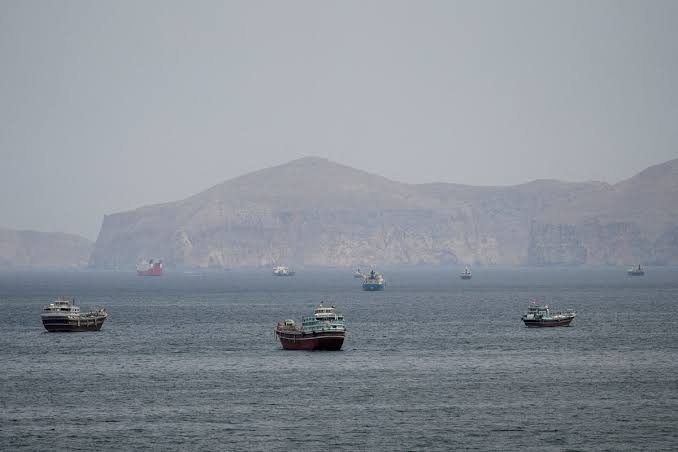
After rising by about 10% on Monday, the price of Brent crude increased to little over $84 per barrel. At $79.20 a barrel, US benchmark crude was up 1.4%. Although oil prices are still below their peak of about $120 per barrel during the war, the US and Iran both claimed control of the Strait of Hormuz, raising concerns about the stability of future supply. Following President Donald Trump’s announcement that Washington was “reinstating” a blockade on Iran in the Strait, the United States conducted more strikes against Iran, which caused US share futures to drop 0.3%.
Fuel prices have increased globally as a result of fighting in the area, preventing oil ships from using the channel to transport crude from the Persian Gulf to consumers. The Nikkei 225 in Tokyo down 1% to 66,574.96 during Asian trading, while the Kospi in South Korea fell 3.2% to 6,589.37.
Even though the government claimed that China’s exports increased 27% in June compared to a year earlier due to the deployment of artificial intelligence driving robust demand for computer chips and other technology, the Shanghai Composite index fell 0.8% to 3,884.32. Australia’s S&P/ASX 200 fell 0.5% to 8,767.00, while Hong Kong’s Hang Seng increased 0.1% to 24,230.46.
Also Read:
Dr. Sofica Bistriceanu’s Journey as a Multifaceted Expert
Delivering Effective Legal Assistance in the UAE with InTrouble: Alexander Kopenkin