Results of the Second Economic Dialogue are Revealed by TRENDS Global and ORFME

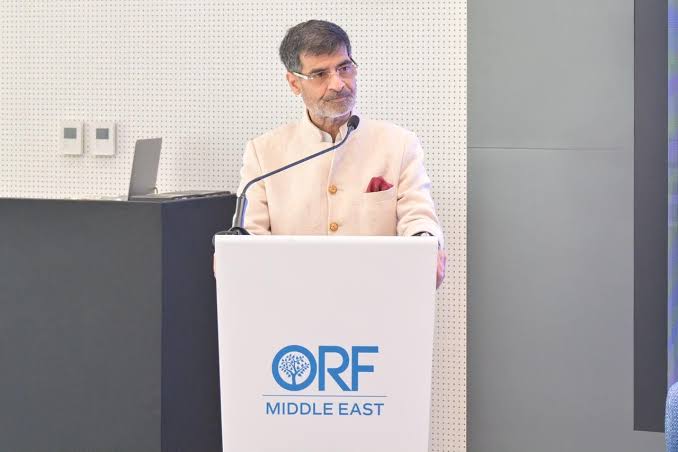
The study findings and policy recommendations of the Second TRENDS Global-ORFME Economic Dialogue, which took place at ORFME’s office at the Dubai World Trade Centre, were introduced by TRENDS Global, a division of TRENDS Group, and the Observer Study Foundation Middle East (ORFME).
The research findings, titled Balancing Connectivity and Economic Security: Post-Conflict Strategies for the Global South and MENA Region, redefined risk in the geopolitical period. As supply chains, energy markets, and international trade are increasingly affected by geopolitical conflicts, risks have shifted from peripheral issues to existential challenges. As a result, national and regional security can no longer be seen as distinct from economic security.
Additionally, added value, flexibility, resilience, and system reliability have replaced efficiency and low cost as evaluation criteria for international markets. Furthermore, markets and insurers are now major forces behind the transformation of international commerce channels. The discussion emphasized that food security and energy security are two sides of the same coin, with both being among the first victims of pandemics and conflicts.
A new model of strategic connectivity in the Middle East should be developed, according to the Second TRENDS Global-ORFME Economic Dialogue. This model should include integrated multimodal trade corridors, stronger ports and logistics infrastructure, protection of vital economic assets, and increased ability to reroute trade when traditional routes are in danger.
Also Read:
Sophie Vancaeneghem On Customer Experience And Hospitality Industry Trends