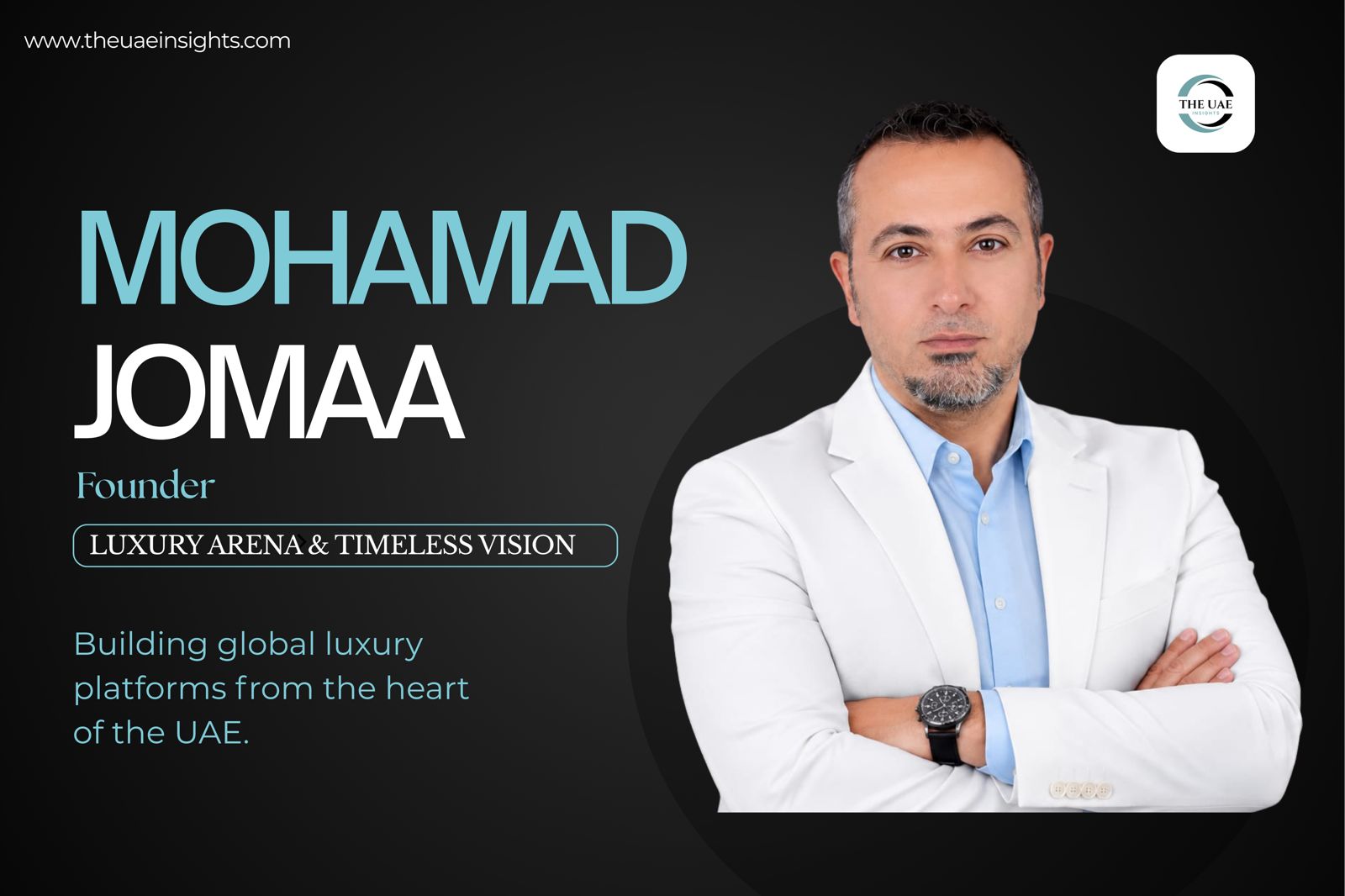
Mohamad Jomaa: Turning the UAE Into a Launchpad for Global Luxury

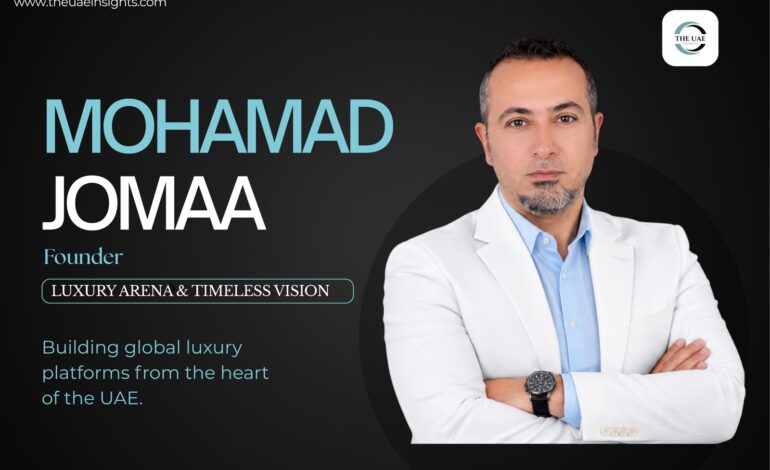
Mohamad Jomaa does not go in for grand statements. He prefers numbers, systems, and playbooks he can repeat and scale. But mention the United Arab Emirates, and the entrepreneur behind Luxury Arena Glasses and Watches and Timeless Vision Goods Wholesalers becomes visibly more animated. Over two decades, he has built and scaled luxury retail businesses across the GCC, from launching Korloff Eyewear at Paris Gallery to running a growing portfolio of exclusive distribution mandates for houses like Aigner, Momo Design, and Tonino Lamborghini. That history has given him an unusually complete view of what makes the UAE work for operators, and in this interview, he shares it without the usual polish.
The UAE Advantage
We began by asking Jomaa what makes the UAE such fertile ground for growing a business.
“I want to answer this the way an operator would, not the way a brochure does,” Jomaa said. “The UAE is exceptional because it removes friction. Anyone who has built a business elsewhere knows how much energy gets lost on things that have nothing to do with the business itself: bureaucracy, unpredictable regulation, banking delays, unclear tax positions, visa headaches. The UAE has stripped those layers away, one by one. When I set up Luxury Arena Glasses and Watches in January 2025, and Timeless Vision Goods Wholesalers later that same year, both entities were operational far faster than the same setup would have taken almost anywhere else. That speed isn’t cosmetic. It translates directly into revenue.
“But the deeper reason the UAE works is what I call the three-market advantage. From Dubai, I’m operating in a domestic market of high-spending residents and tourists, a regional GCC market that treats Dubai as its distribution hub, and an international market, because Jebel Ali and DXB put Europe, Asia, and Africa within hours of me. Very few cities compress those three markets into one address. For a luxury eyewear and writing-instruments business built on Italian manufacturing, GCC distribution, and international brand partners, that geography is the business model.
“Then there’s a softer factor people underestimate: the UAE rewards ambition without punishing you for it. Whether you’re Emirati, Lebanese, Indian, or European, if you build something credible, doors open. That kind of meritocracy is rare, and it’s why so many category-defining companies are being founded here now, rather than simply exported here.”
Three Shifts That Changed the Game
We asked Jomaa which changes have had the biggest impact on how he runs his businesses in recent years.
“Three shifts have genuinely reshaped how I run my ventures,” he explained. “The first is the introduction of corporate tax at 9%, which came into effect in June 2023 and is now fully built into how we plan. On the surface, people saw it as the end of tax-free Dubai, but that’s a misreading. What it actually did was force every operator, myself included, to run cleaner books, tighter P&Ls, and audit-ready financials from day one. For a founder with an investor mindset, that’s a gift. It made UAE companies far more investable, far more bankable, and far more presentable to international partners. My Italian manufacturers, my brand principals in Europe, the mall operators, they all take a UAE company more seriously today than they did five years ago, because the governance is real.
“The second big shift is 100% foreign ownership of onshore LLCs. Combined with the maturing of free zones like DAFZA, where JDM Swiss Watches ME FZCO is licensed, that change has completely rewritten how deals get structured. It used to be that a foreign brand principal would hesitate to give exclusive GCC rights because the local ownership structure created ambiguity. Today, when I sit across from an Italian, Swiss, or French house and negotiate exclusive distribution, the ownership question doesn’t even come up. That is a quiet revolution.
“The third change is the Golden Visa and long-term residency framework. This matters more than people think for a founder. When you can plan your life and your family’s life on a ten-year horizon, you plan your business the same way. You invest in inventory, in fit-outs, in team development, in brand-building, because you’re not living quarter to quarter on visa cycles. Retention of talent is transformed too. My senior team members can commit to multi-year build-outs because their own status here is stable.
“Combine those three, tax discipline, ownership clarity, and residency stability, and the UAE went from being a great trading post to being a legitimate headquarters jurisdiction. That is a meaningful upgrade.”
Building the Ecosystem
Next, we asked how his companies are contributing to the UAE’s growing business ecosystem.
“I try to contribute in ways that are structural, not cosmetic,” Jomaa said. “The first is bringing international brands into the UAE that would otherwise never have arrived here on their own. Most global luxury houses, especially in eyewear, watches, and writing instruments, don’t have the appetite or the local knowledge to enter the GCC directly. Through the platforms I operate, I’ve brought Aigner Eyewear, via JDM Swiss Group where I consult, along with Momo Design Eyewear and Tonino Lamborghini Pens, into the region under structured, exclusive agreements. Every one of those launches means new SKUs on UAE shelves, new marketing spend in the local economy, and new categories being created rather than fought over. That’s real ecosystem building.
“The second contribution is turning Dubai into a re-export hub for luxury goods. Timeless Vision isn’t just a UAE retail business, it’s a wholesaler with a mandate to service the wider GCC and beyond. When stock lands at Jebel Ali, clears, and then flows into Saudi Arabia, Kuwait, Qatar, and even into North African and South Asian markets, every one of those movements generates logistics revenue, clearing revenue, VAT, and employment inside the UAE. That’s exactly the model the UAE’s non-oil economy is being built on.
“The third contribution, and this is one I care about personally, is talent development. In my previous chapter at WGI Group running the Chillibeans franchise, and now in my own ventures, I’ve trained UAE-based team members in ERP, POS, category management, and data-driven retail. Many of them are still in the industry, and some now run their own operations. Every founder here has a responsibility to leave behind more capable operators than they inherited. I take that seriously.
“And finally, I try to pay the ecosystem back through visibility, speaking at industry forums, being open with fellow founders about what worked and what didn’t, mentoring younger entrepreneurs coming out of the free zones. That’s soft infrastructure, but it matters.”
Advice for Future Founders
We asked what advice he would give entrepreneurs planning to set up a business in the UAE.
“I’ll give five pieces of advice I genuinely wish someone had put in front of me earlier,” he said.
“One, choose your license structure with the same seriousness you choose your business model. Free zone versus mainland versus offshore isn’t a paperwork decision, it’s a strategic one. It determines who you can invoice, where you can hold stock, whether you can bid for government contracts, and how you access customs. I have both a free-zone footprint through JDM and an onshore LLC footprint through Luxury Arena and Timeless Vision, and each exists for a specific reason. Don’t let a corporate services agent decide this for you in fifteen minutes.
“Two, capitalize properly. The UAE market isn’t cheap. Mall rents in Dubai Mall or Mall of the Emirates, showroom fit-outs, working capital for premium inventory, professional marketing, these are real numbers. Too many new founders arrive with a great concept and six months of runway. Six months isn’t a business, it’s an experiment. Come in with twenty-four months of oxygen or don’t come in at all.
“Three, respect the customer, not the postcode. Dubai has some of the most demanding consumers in the world. They travel, they compare, they’re on Instagram three hours a day. If your product, packaging, and service aren’t genuinely world-class, the postcode won’t save you. Build for the customer, then let the location amplify you.
“Four, build relationships before you need them. The UAE is transactional on the surface and deeply relational underneath. Your landlord, your bank, your accountant, your customs broker, your brand principal, none of these should meet you for the first time in a crisis. Invest in those relationships during the calm periods.
“Five, set up like an investor, not like a shopkeeper. From day one, keep clean books, use proper ERP, separate personal and business banking, and produce monthly management accounts even if no one is asking for them yet. The day you want to raise capital, sell equity, sign a global brand, or take on a strategic partner, that discipline is the difference between a deal and a dead end.
“If I compressed those five into one sentence: plan the UAE business the way a global fund would plan it, not the way a small trader would. The market rewards that upgrade in mindset immediately.”
The Road Ahead
Finally, we asked what excites him most about the future of business in the UAE.
“Honestly, what excites me most is that the UAE has stopped being a stopover and started being a starting point,” Jomaa said. “For decades, this country was where global brands came to sell. Now it’s where global brands are being built. That’s a completely different phase of the economy, and it changes the identity of the entrepreneurs who operate here. I no longer see myself as a distributor of foreign luxury, I see myself as a founder of GCC-born luxury platforms that happen to work with international houses. That mental shift is happening all over the country, in fintech, in food, in fashion, in health, in AI. The UAE is quietly manufacturing the next generation of global companies.
“I’m also excited about the institutionalization of family capital. A lot of GCC wealth is moving from passive real estate holdings into active operating businesses and structured private equity. That creates a serious pool of patient, sophisticated capital for founders like me, capital that understands the region, respects long-term brand building, and isn’t looking for a five-year exit at any cost. That’s unusual globally, and it favors builders.
“I’m excited by the infrastructure roadmap too: the new terminal at Al Maktoum, the continuing expansion of Jebel Ali, the rail projects, and the ongoing digital government initiatives. Every one of those directly reduces cost or unlocks new markets for a business like mine.
“But most of all, I’m excited by the pace of ambition. In the UAE, if you propose a big idea, the first question you’re asked isn’t ‘why?’, it’s ‘when?’ That single cultural detail is why I chose to build here, why I keep expanding here, and why I believe the next twenty years of luxury retail and distribution in this region will be defined by companies born in this country.”
“The UAE is not a market anymore. It is a launchpad. And I am building accordingly.”
Connect with Mohamad Jomaa on LinkedIn.
Also Read:-
Beyond the Pilot: Why Nils Ehle Says Most AI Projects Are Solving the Wrong Problem
Kassem Lahham | From Deutsche Bank to Leading an Independent Wealth Advisory Firm in Dubai